


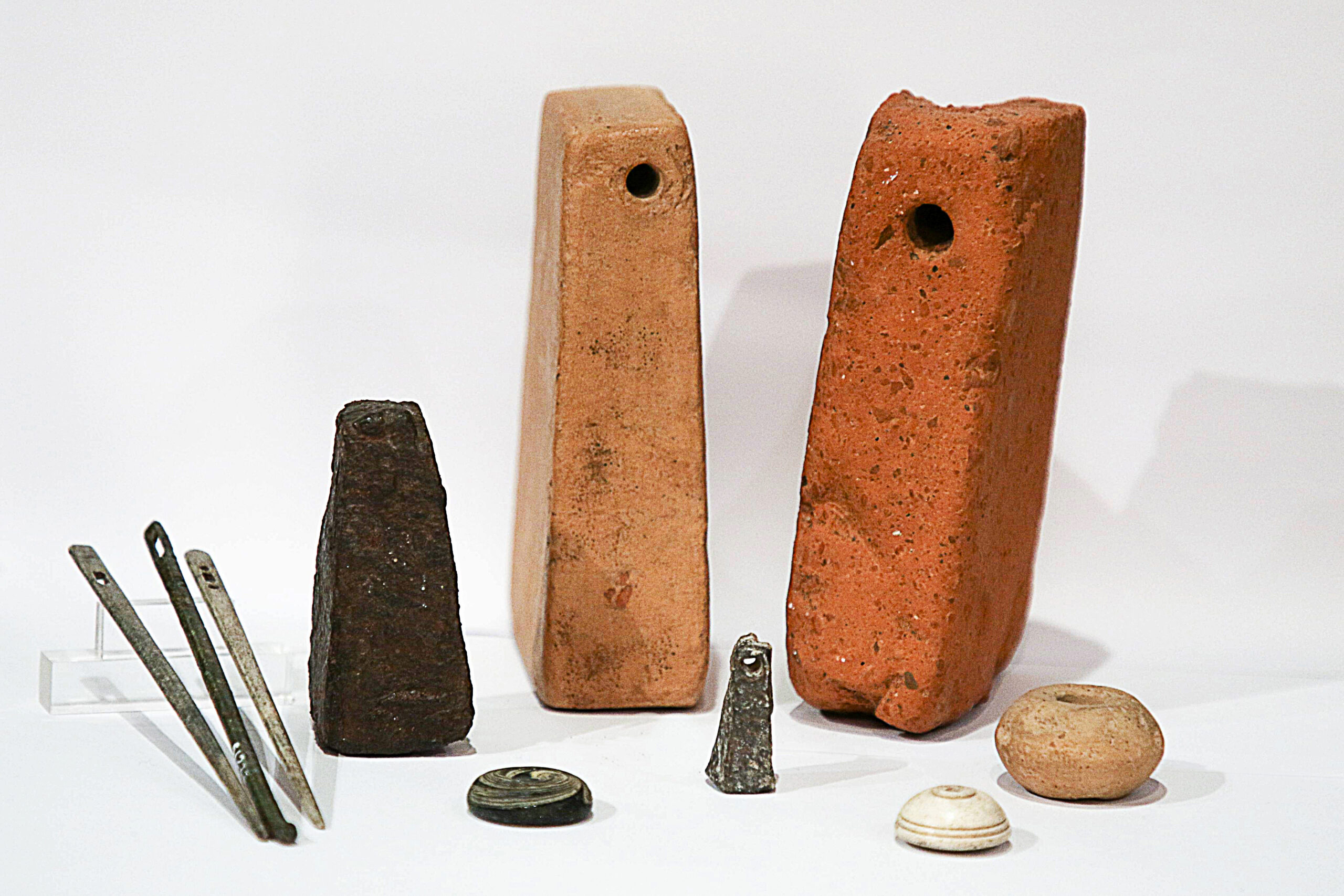
On the transhumance routes, the production of yarns and fabrics is attested through the discovery of many objects fromthe domestic sphere. The creation of yarn made from wool or vegetable fibres such as linen and hemp, can be traced from the discovery of spindles, the perforated weights placed at the end of a wooden stick in order to create support and balance. The fibres were fixed on the top of the spindle and by rotating the stick, the yarn took shape by winding itself in a skein. Subsequently, the material was placed on the vertical loom: the warp was stretched by hooking groups of threads to the truncated pyramidal terracotta weights on which measurements, decorations, or signs could be engraved. Using a mobile shuttle, the women wove the weave which, once completed, was sewn with large bone or bronze needles.