


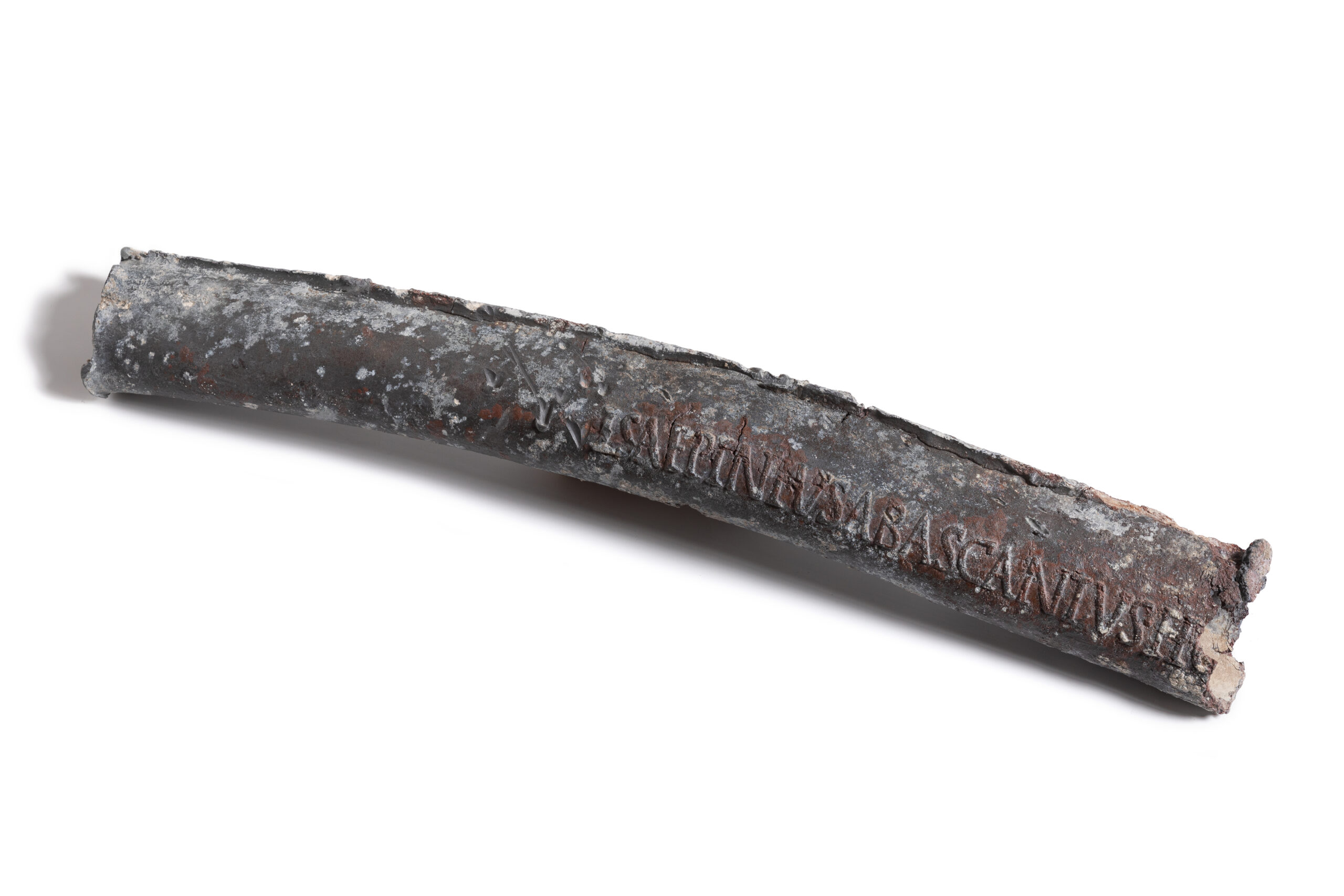
Following the urban layout of Saepinum, it is possible to recognize ingenious solutions applied to facilitate the water supply and to convey water in a functional way towards the buildings, avoiding problems related to stagnation. The city built on the surface, distinguished between residential districts and public areas, corresponds to an extension that moves below the streets and buildings, whose systems are not visible but nonetheless connected to the urban structures above. This is the articulated drainage network for public and private supply that joins the complex surface water system consisting of canals, cisterns, wells, fountains and manholes. Over the years, numerous fragments of fistulae aquariaemade out of lead have been found, the remains of which testify to the uses and practices related to water but also bear the names of the benefactors who promoted the construction of infrastructural public works. In the water pipe found in the campus-pool-porticus complexthere is an inscription in relief by Lucius Saepinius Abascantus, a craftsman who had probably taken on the work of laying the pipes of the aqueduct on behalf of the municipality.