


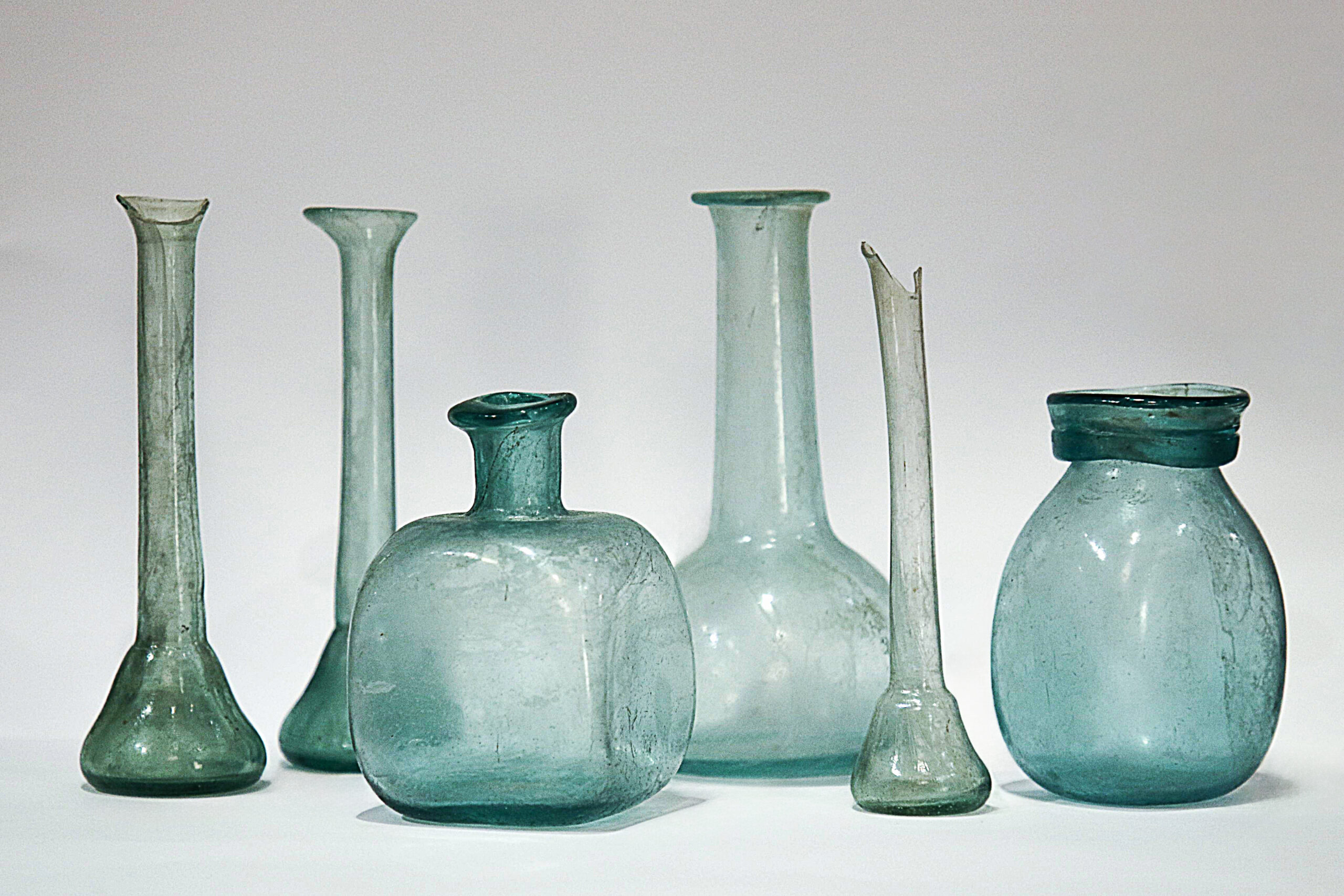
Ceramic objects are among the finds that are most frequently found in archaeological contexts, therefore they represent the chronological line that allow us to tell the biography of places. Also in Saepinum, through these finds it is possible to learn more about the contexts of production and diffusion of everyday materials used by the inhabitants of the town. Different types of table ware such as plates, cups, chalices and bowls produced in Aretine sigillata, Italic sigillata, African red slip ware and South Gaulish sigillata refer to the early imperial period. In this era, moreover, the spread of techniques for the production of glassware has led to a greater circulation of these materials. Together with ceramic objects, these glass artifacts are among the most used containers in domestic use: in Saepinum we find bottles with dual purposes, for transport and for the table, a splendid brown mould-made cup, small jars intended to contain ointments orsauces and a series of balsam bottles used for personal hygiene. Numerous other finds pertaining to construction and craft activities have been found inside the sewers; these are tools and utensils such as chisels, pliers and pincers, metal awls and scrapers, weights, metalworking elements, locks and many more.