


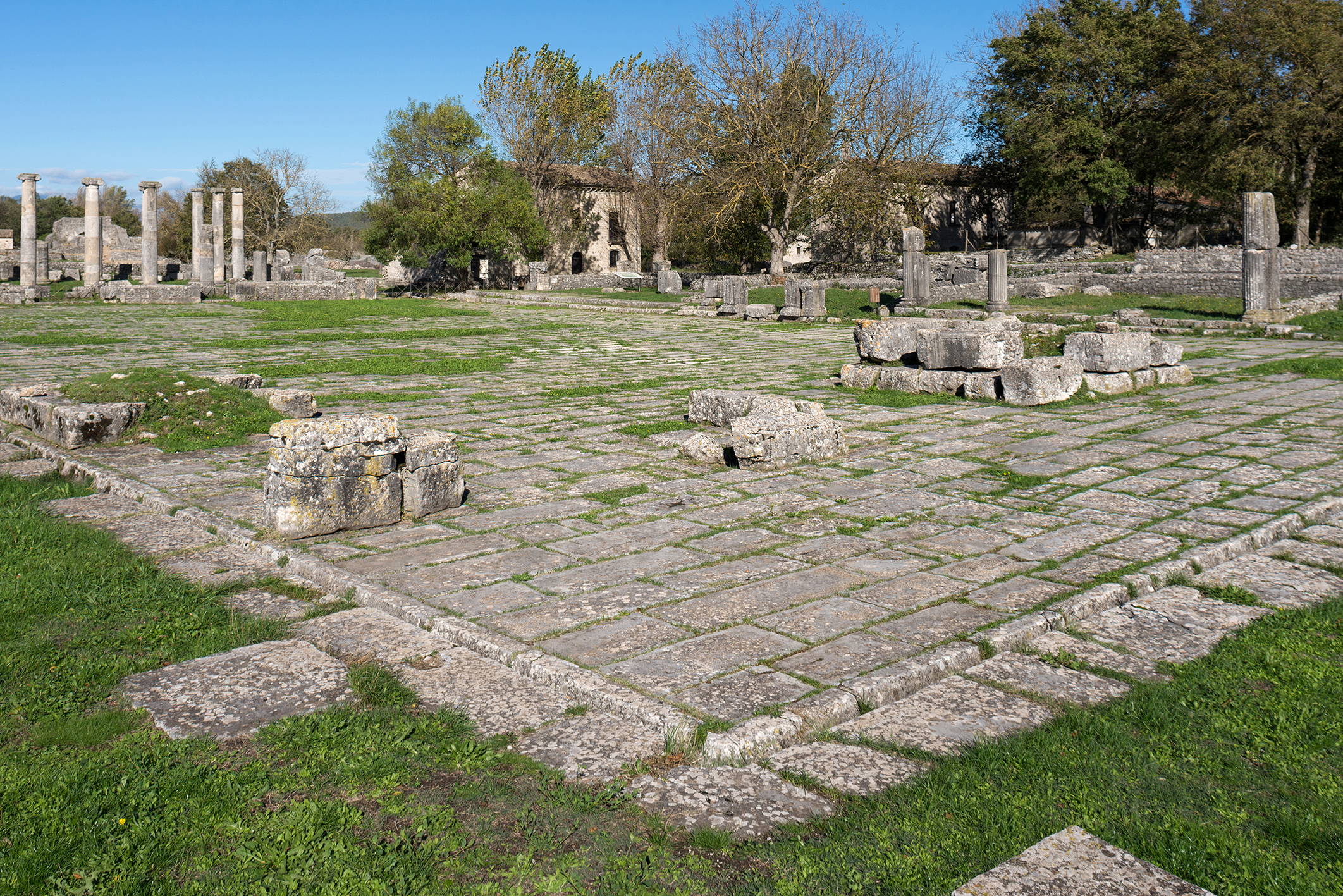
Starting from the pre-Roman period, the relationship between the settlements on the higher ground and those located in the valley gradually changed; with the stable occupation of the area, the settlement in the plain established itself as a space for exchange and meeting. Inside the emporium, probably originally protected by a wooden palisade, the buildings constructed near the two main roads took on monumental architectural forms to fulfil increasingly complex functions and respond to the needs posed by the new urban entity of the Augustan age. The Forum of Saepinum, corresponding to the area originally used for the resting of flocks, becomes the place to attend political rallies and triumphal processions, it is the utilitarian space used for contracting business, paying homage to the imperial family or deserving local personalities, placing political, social and administrative issues under divine protection. The Roman town maintained its vitality until the fifth century AD, then the gradual abandonment led to the collapse of the main public buildings and the narrowing of the inhabited areas. The population takes refuge again on the higher grounds but the large paved square is not completely abandoned: in it there are signs left by peoples up to the last century who, retracing the tratturo and the mountain route, have added their own stories.